📍 Andalusia · Day Trip From Playa Granada to the heart of the Sierra: whitewashed villages, Berber architecture and the most authentic flavours of Granada. 🚗 Distance ⏱ Duration 📅 Best Season 💪 Difficulty 130 km (1h 30min) Full day Spring and autumn Easy-Moderate Why the Alpujarra? The Alpujarra is one of Granada's best-kept secrets
A territory stretching along the southern slopes of the Sierra Nevada, among vertiginous ravines, centuries-old chestnut trees and white villages that seem to cling to the rock
A land with a Berber soul, Moorish history and an identity so powerful that centuries of change have been unable to erase it
For those staying at Playa Granada , this trip is perfect: in just over an hour and a half by car, you can reach one of the most unique landscapes in all of Spain
You'll go from the Mediterranean breeze to Capileira's 1,400 metres of altitude in a single morning
In this article we guide you through the classic one-day route: Lanjarón, the Poqueira Gorge (Pampaneira, Bubión and Capileira) and the curious 'witch village' of Soportújar
A perfect day, full of history, architecture, gastronomy and that quality of light that only exists in Andalusia. "You'll go from the Mediterranean breeze to Capileira's 1,400 metres of altitude in a single morning." From Playa Granada to the Alpujarra 🚗 Distance and Time from Playa Granada Destination Distance Time Route Lanjarón (first village) 105 km 1h 15min A-44 → Dúrcal → A-348 Pampaneira (heart of the route) 130 km 1h 30min A-44 → A-348 → GR-421 Capileira (highest village) 140 km 1h 40min A-44 → A-348 → GR-421 💡 TIP: Leave before 8:30am to arrive calmly and park without problems
In high season, car parks fill up from 10am. 🛣️ About the road: The A-44 heading north is a motorway in perfect condition up to Dúrcal
From there, mountain road with continuous curves but well-paved
If you suffer from car sickness, bring medication. 🅿️ Parking: Each village has designated parking areas outside the old town
Don't try to park inside: the streets are narrow and some are closed to traffic
The Architecture That Explains Everything The architecture of the Alpujarra is the first reason to come
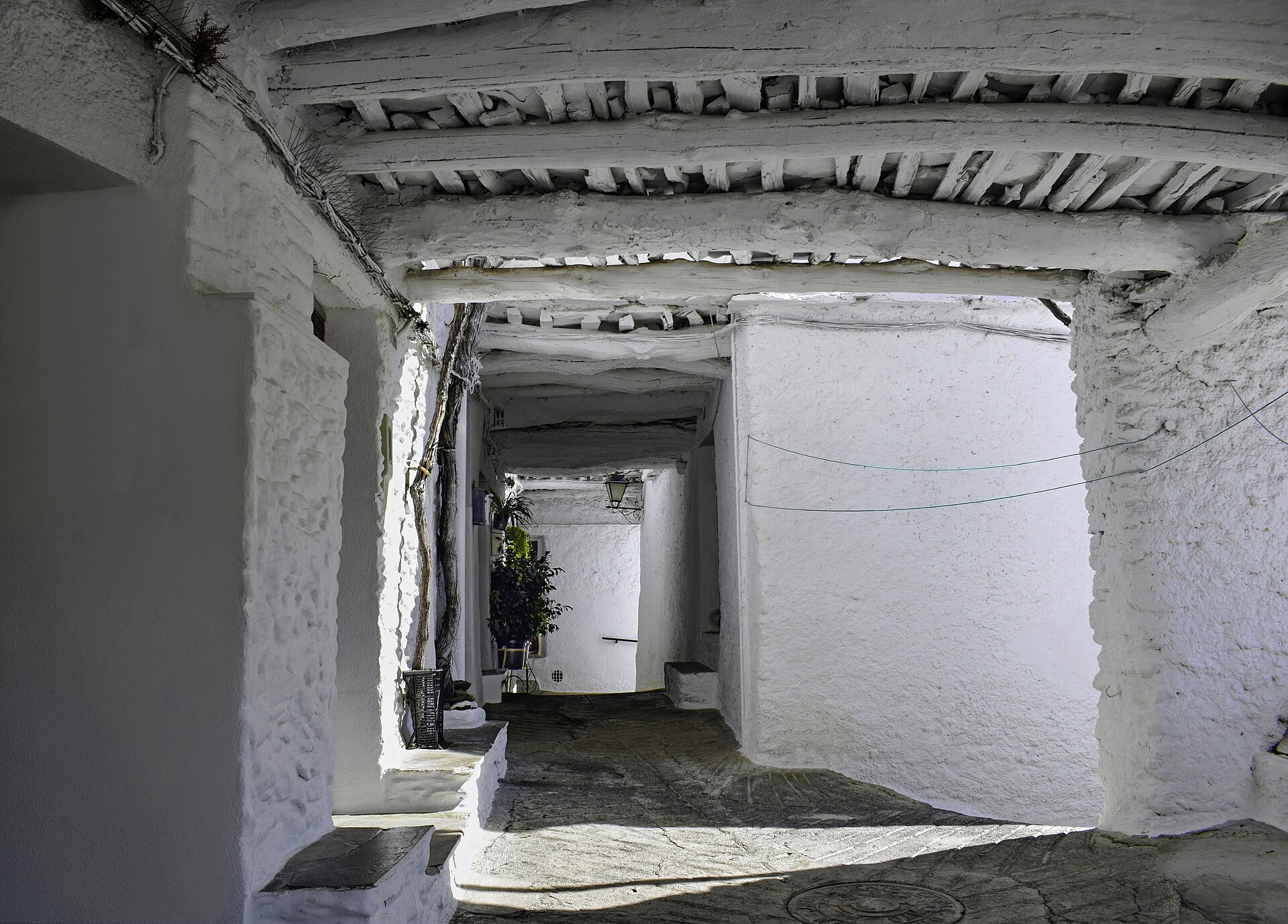
Its whitewashed houses, built with stone, clay, chestnut wood and launa (a waterproof clay slate that acts as both tile and insulator), are stacked on the hillside in a stepped pattern, creating an almost impossible geometry
This architecture is no aesthetic accident: it has deep roots
When the Arabs conquered the Peninsula, North African Berber tribes were assigned the high mountainous lands of the Alpujarra
They brought with them a way of understanding space characteristic of Islamic architecture: intimate, closed to the exterior, with winding streets leading nowhere, inner courtyards, small windows, discreet façades
The result is an urban landscape powerfully reminiscent of the Moroccan Rif — especially Chefchaouen seen from afar — which, paradoxically, after centuries of history, has become one of the purest and best-preserved architectural ensembles in all of Europe
The defining elements of this architecture: Terraos: flat terraces that serve as the roof of the house below
Neighbours used these communal spaces to dry fruits and rugs
Tinaos: vaulted passageways connecting two buildings above the street
Crossing one is an almost mystical experience
Chimneys: conical, tall, with decorative 'hats' that vary from village to village
Launa: the construction key
This waterproof clay slate is applied over the terrao and prevents leaks
It has worked for centuries better than any modern material
The Villages on the Route STOP 1 · 105 km from Playa Granada Lanjarón — The Gateway to the Alpujarra Lanjarón is the first gateway to the Alpujarra and, although many travellers rush through it, it deserves at least an hour of exploration
It's an elongated village, dominated by a main street from which narrow alleyways of genuinely Alpujarran architecture hang towards the mountain
The tourist office is near the famous spa — yes, the one with the waters — and is a good starting point
But the best of Lanjarón is in its side streets: the Placeta de Santa Ana , with a 17th-century washhouse, a fountain with verses by Lorca engraved in stone, and an explosion of plants that make the atmosphere almost jungle-like
Water is the great protagonist of Lanjarón